Pulse and Beat: Finding the Grid Under the Music
Every piece of music implies a steady pulse, even when nothing in the arrangement plays it. Learning to locate that pulse is the first practical skill in theory, because every other term — bar, tempo, note value — is defined relative to it.
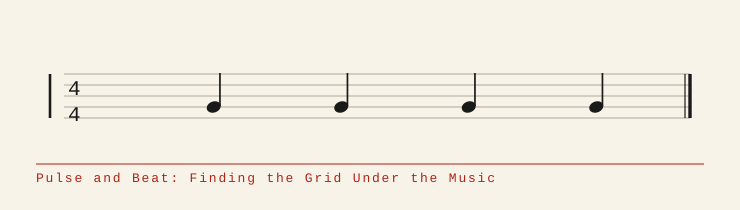
The pulse is not a sound, it is a rate
Tap your finger on a table at a comfortable, even speed. You have just produced a pulse. Nothing about those taps tells you what music they belong to; a pulse is simply a repeating instant, a rate of recurrence. When you clap along to a recording and your claps land where the drummer's hi-hat lands, you have not copied a sound — you have locked onto the same rate.
This distinction matters because a great deal of music never states its pulse outright. A solo piano ballad may have no percussion at all, yet a listener still feels where the beats fall. The performer creates that feeling through tiny timing adjustments: a chord held slightly longer, a melody note placed a hair early. The pulse exists as an agreement between player and listener, not as an instrument in the mix.
Beat, tempo and metre are three separate things
The beat is one unit of the pulse, the thing you count. Tempo is how fast the beats pass, measured in beats per minute. Metre is how beats are grouped — usually into twos, threes or fours — and it is what makes a waltz feel different from a march at the same tempo. You can change any one of the three without touching the other two: speed up a waltz (tempo changes), or regroup the same beat stream into fours instead of threes (metre changes).
Beginners often collapse these into one idea and then get confused when a piece “feels fast” but is written in a slow tempo. A common example: a piece notated at 60 beats per minute with four fast notes per beat sounds considerably faster than its tempo number suggests. The tempo is 60; the surface is dense.
Finding the pulse in a recording you already know
Pick a track you have heard at least twenty times. Play the first thirty seconds and tap. Most listeners instinctively tap at roughly twice the rate of the actual beat — a comfortable tapping speed is around 100 to 120 taps per minute, and much pop music sits at 70 to 90 beats per minute. If your tapping feels frantic or your hand tires, halve it. If it feels sluggish and you keep wanting to insert an extra tap, double it.
The reliable test is where the harmony changes. Chords almost always change on a beat — usually on beat one of a bar. Find the chord changes, tap where they land, and you have the beat. Then check your answer against the bass drum or the bass line; in most popular styles the bass note and the chord change coincide.
Key takeaway
The pulse is a rate, not a sound. Beat is one unit of it, tempo is how fast it passes, metre is how it is grouped. Find the chord changes and you have found the beat.
Exercise
Choose one recording and tap for sixty seconds without stopping. Then write down two numbers: your tapping rate in taps per minute (count for fifteen seconds and multiply by four) and the number of taps between chord changes. Those two numbers are the tempo and the metre, and you have just transcribed them by ear.
Lesson 1 of 11 · Notation errors to [email protected].